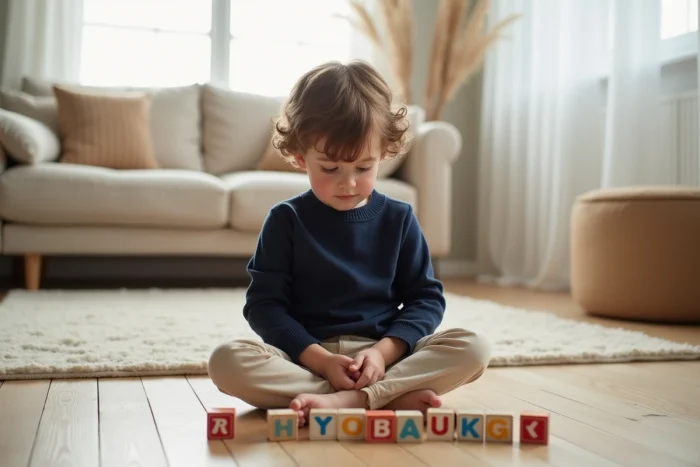
Noah is among the most commonly given male names in France since the mid-2000s. With 3,260 births recorded in 2024 and a fifth place in the national ranking, this name maintains a standing that few of its competitors have sustained for such a long time. Its Hebrew etymology, short sound, and simultaneous adoption in several European countries make it a unique case study in the landscape of French names.
Noah and Noé: a rare coexistence in the top names in France
Noah and Noé have simultaneously ranked high among male names for several years. This prolonged coexistence has no real equivalent in other French-speaking or European countries.
In Belgium, Switzerland, or Germany, one spelling clearly dominates. In France, both forms coexist. Noah, seen as the international version, appeals to parents attracted to a name that is readable in several languages. Noé, a Frenchified spelling directly linked to the biblical narrative, retains a clientele attached to tradition. Analyzing the popularity of the name Noah in France without considering this duality overlooks part of the picture.
This coexistence reflects a cultural tension: French parents hesitate between an openly biblical anchor and an openness to a sound perceived as Anglo-Saxon. The two names share the same Hebrew root (rest, comfort), but their social trajectories diverge.
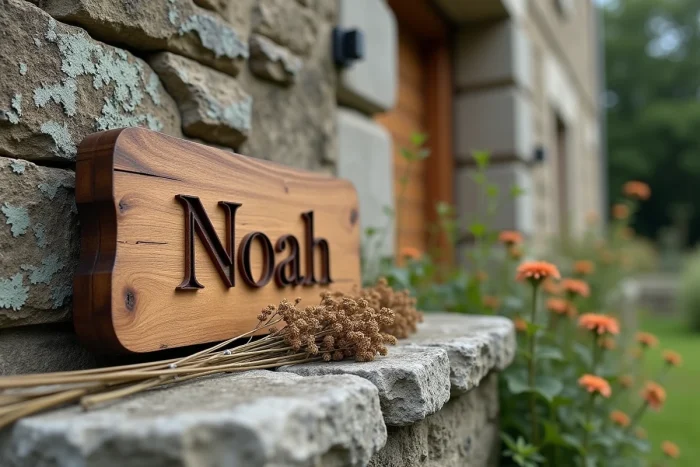
Hebrew root and biblical diffusion of the name Noah
Noah comes from Hebrew. The most commonly accepted meaning refers to notions of rest and comfort. In the Genesis narrative, Noé (or Noah in its anglicized form) is the patriarch tasked with building the ark to survive the Flood. This foundational story has ensured the diffusion of the name across the three major monotheistic religions.
The etymology is not limited to a single path. Some sources also link Noah to Aramaic roots, which explains its presence in varied cultural areas, from the Middle East to Scandinavia. The recorded origins include Hebrew, Aramaic, Danish, Dutch, Norwegian, and Canadian traditions.
This multiplicity of claimed origins plays a role in the perception of the name: Noah sounds neither exclusively religious nor exclusively modern. It occupies an intermediate position that reassures very different profiles of parents.
Pop culture and media visibility: what propelled Noah in France
Noah’s rise in the French ranking is not solely explained by its biblical heritage. Anglophone popular culture has acted as an accelerator since the 2000s.
Two figures have contributed to establishing this name in the imagination of young French parents:
- Joakim Noah, a highly publicized NBA player in France thanks to his lineage with Yannick Noah. His American career (up to 2020) has given the name a sporty and cosmopolitan image, widely relayed by the French press.
- Noah Kahan, an American folk singer whose success in Francophone Europe has accelerated since 2023. His visibility on streaming platforms has exposed the name to a generation of future parents.
These references do not alone create a trend, but they maintain familiarity. A name regularly heard in the media remains mentally accessible at the moment of choice, which solidifies its position in the rankings year after year.

Birth profile and recent dynamics of the name Noah
Noah has settled into the top 10 male names and remains there with a regularity that competing names (Lucas, Raphaël, Léo) have not all maintained for as long.
The fifth place achieved in 2024 shows a slight leveling off compared to peak years, without indicating a sharp decline. Noah remains a high plateau name rather than a name in decline. The available data do not allow for a certain prediction of whether it will begin a marked retreat in the coming years or stabilize durably at the top of the rankings, as some classic names have done before it.
Geographical distribution across the territory
The popularity of Noah is not uniform. Some departments adopt it significantly more than others, although detailed data by department varies according to sources. This geographical disparity is common for names with international connotations: urban areas and regions with high media exposure tend to adopt them first, before broader diffusion.
What the choice of Noah reveals about naming trends in France
The success of Noah illustrates several changes in how French parents choose a name for their boy.
- The preference for short names (maximum two syllables) has strengthened since the early 2000s. Noah, Léo, Adam, Sacha follow this logic.
- The attraction to names that are internationally readable, without accents or ambiguous spellings, pushes Noah ahead of Noé among bilingual or traveling families.
- The blurring of boundaries between biblical names and trendy names: Noah is perceived as modern even though it is one of the oldest attested names.
Field feedback varies on one point: is Noah still perceived as original by parents choosing it in 2025, or is it starting to suffer from its own omnipresence in playgrounds? The answer likely varies by region and social background, but the question deserves to be asked for anyone considering this name today.
The name Noah has reached a stage where its popularity itself becomes a factor in decision-making, in one way or another. Parents who choose it bet on a safe value, rooted in a millennia-old tradition and validated by two decades of success in France. Those who dismiss it do so precisely because it has become too common in their eyes. This tension between classic and saturated will likely define its trajectory in the coming years.