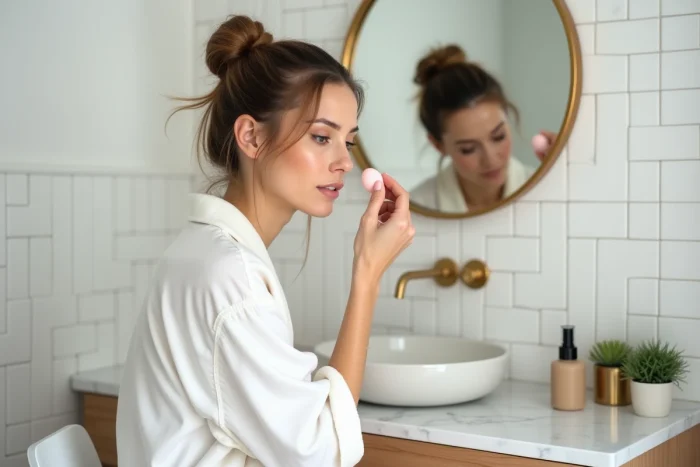
The European cosmetics market is undergoing a phase of rebalancing. On one side, dermatologists advocate for routines reduced to three products. On the other, brands are multiplying references and promises on their packaging. With strengthened regulations on UV filters and the rise of AI-assisted skin diagnostics, the benchmarks are changing rapidly for those looking to care for their skin and appearance on a daily basis.
Sun filters and cosmetic claims: what European regulations are changing
Sun protection remains the most underestimated beauty gesture in a daily routine. Applying a moisturizer or foundation without UV filter is akin to ignoring the primary factor of visible skin aging.
The European Chemicals Agency (ECHA) published reports in 2024 on the environmental risks of certain organic UV filters, notably octocrylene. This work feeds into a tightening of regulatory scrutiny across the European Union.
At the same time, the European Commission, as part of the “Green Claims Initiative” launched between 2023 and 2025, is preparing regulations for “ocean-friendly” or “reef safe” claims on cosmetic packaging. Several countries (France, Spain, Italy) are already working to limit these claims to combat greenwashing. For those wishing to access Beauté Chic for beauty, this regulatory evolution provides an additional sorting criterion when choosing a sun product.
In practical terms, reading the INCI list of a sunscreen is as useful as comparing prices. A product that claims “reef safe” without third-party certification does not guarantee anything specific at this stage. Field feedback varies on this point: some private labels are rigorous, while others are purely marketing.
Skinimalist routine: what dermatologists recommend
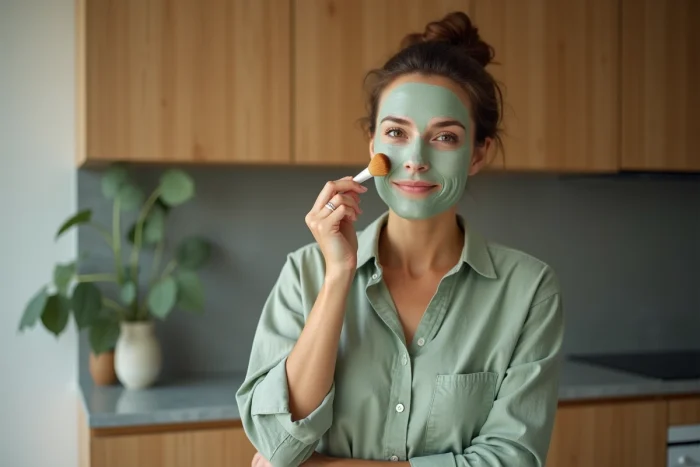
The term “skinimalism” has been circulating for a few years, but it is not a magazine trend. The British Association of Dermatologists, in its clinical recommendations updated in 2023-2024, encourages routines reduced to the essentials to protect the skin barrier.
Three products, no more
The recommended protocol consists of three steps: a gentle cleanser, a moisturizer suitable for the skin type, and sun protection. Multiplying products increases the risk of contact dermatitis, a problem that the National Eczema Society and the BAD document in their joint awareness campaign.
Layering vitamin C serum, glycolic acid, retinol, and moisturizer every morning exposes the skin to poorly managed interactions. The available data does not allow for a conclusion that the systematic addition of concentrated actives improves facial radiance in the long term.
- Gentle cleanser (pH close to that of the skin, without harsh sulfate): it preserves the hydrolipid film instead of stripping it morning and night
- Targeted moisturizer (light cream for combination skin, richer balm for dry skin): it restores the skin barrier and prepares the complexion for makeup
- Sunscreen with SPF 30 minimum: it protects from UVs daily, including in winter and overcast weather
This streamlined approach also frees up time and budget. A quality cleanser lasts longer than a collection of ten half-used products.
AI skin diagnostics: promises and limits
Several mobile applications and pharmacy kiosks now offer skin diagnostics based on photographic analysis by AI. The idea is appealing: point your camera at your face and receive a personalized assessment of hydration, pigmentation spots, and enlarged pores.
The reliability of these tools varies significantly from one device to another. A diagnosis made under artificial lighting in a store does not yield the same results as a dermatological consultation with a dermatoscope. Algorithms are improving, but their clinical validation remains patchy.
The real interest of these tools lies elsewhere: they allow for tracking the evolution of one’s skin over time. Taking a standardized photo each month, under the same lighting conditions, provides a visual follow-up that memory alone cannot offer. To adjust one’s beauty routine, regular monitoring is better than a one-off diagnosis.

Makeup and complexion care: mistakes that sabotage radiance
Applying foundation on poorly prepared skin does not correct the complexion; it freezes it. Preparing the face before makeup affects both the longevity and the final appearance as much as the choice of the product itself.
Hydration before foundation
A light moisturizer applied a few minutes before makeup allows the foundation to glide instead of clinging to dry areas. Without this step, makeup emphasizes fine lines instead of softening them.
The trap of excessive layering
Primer, concealer, foundation, setting powder, setting spray: each additional layer weighs down the result. In contrast, a single well-chosen tinted product (BB cream, light foundation) applied on properly hydrated skin often gives a more natural glow than a five-step makeup routine.
- Choose the foundation texture according to the season: fluid formulas are better suited for warm weather, thicker creams in winter when the skin is drier
- Apply the product from the center of the face outward to avoid demarcations at the jawline
- Replace loose powder with blotting paper on the T-zone to absorb sebum without thickening the look
A luminous complexion relies more on the state of the skin than on the amount of makeup. Daily care (hydration, sun protection, gentle cleansing) remains the foundation. Makeup is just an amplifier, not a universal corrector. The most useful beauty advice rarely concerns the products themselves, but rather how to prepare the skin to receive them.