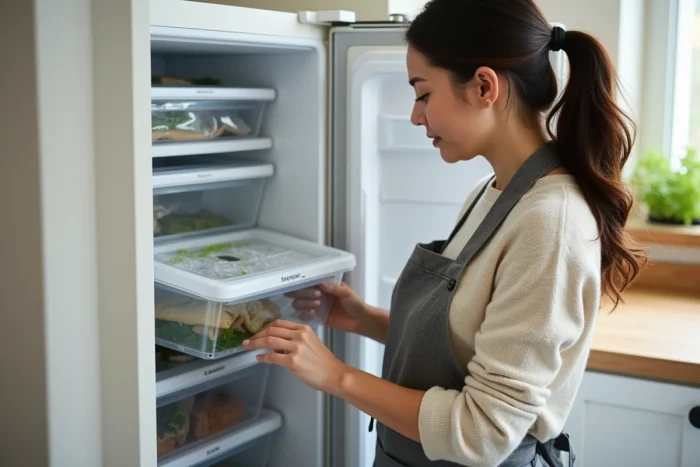
A classic freezer cools food over several hours, which forms large ice crystals and alters the texture of products once thawed. The blast freezer, on the other hand, lowers the temperature in just a few tens of minutes. This difference in speed changes the quality of preservation, but also the way to organize meals, shopping, and manage the food budget.
Slow freezing vs rapid freezing: what the differences reveal
The distinction between freezing and blast freezing is not just a matter of vocabulary. It is based on the size of the ice crystals formed within the fibers of the food.
| Criterion | Classic domestic freezer | Blast freezer |
|---|---|---|
| Temperature drop speed | Several hours | A few tens of minutes (down to -40 °C) |
| Size of ice crystals | Large crystals that puncture the cells | Microcrystals, cellular structure preserved |
| Texture after thawing | Often soft, loss of juice | Close to fresh product |
| Optimal storage duration | Several months depending on the food | Longer due to better initial preservation |
| Historical usage | General public, long-term storage | Professional, increasingly domestic |
As Dalkia Froid Solutions reminds us, frozen products are more degraded than blast-frozen products because slowly formed crystals are larger and damage the tissues more. In practice, this means that vegetables frozen in just a few minutes retain their crunch, color, and nutritional qualities better than the same batch placed in a standard freezer.
For those considering investing in a blast freezer, this technical data is the starting point for all other daily benefits.

Batch cooking and blast freezer: a duo that reduces food waste
Batch cooking, which involves preparing the week’s meals in a single session, has become widespread since the rise in food prices. The Cetelem Observatory highlights in its 2024 consumption report that the rise in food prices is pushing households to cook more at home and to better utilize their refrigeration equipment to limit waste and last-minute purchases.
A classic freezer already allows for storing prepared dishes. However, a blast freezer offers a decisive advantage: the rapid temperature drop prevents bacterial proliferation during the critical window when the food is still warm. Cooked dishes go from hot to frozen without stagnating for hours at room temperature.
What the blast freezer concretely changes in meal organization
- Seasonal vegetables bought in large quantities (zucchini, beans, tomatoes) can be frozen on the same day, with texture preserved upon thawing, unlike slow freezing which often makes them spongy.
- Batch-cooked dishes (soups, sauces, gratins) are stabilized quickly, reducing health risks associated with gradual cooling and extending their actual shelf life.
- Leftover meals, often thrown away due to lack of a quick solution, find a second life: frozen within the hour, they retain sufficient quality to be consumed weeks later without notable loss of taste.
The result is measurable on two fronts: less food wasted and fewer impulsive shopping trips during the week.
Domestic food safety: an underestimated angle
Fresh product recalls are multiplying in Europe. The Rapid Alert System RASFF, jointly managed with EFSA, has recorded numerous recalls related to Listeria or Salmonella in meats, fish, cheeses, and prepared dishes since 2022. Its 2023 annual report confirms this trend.
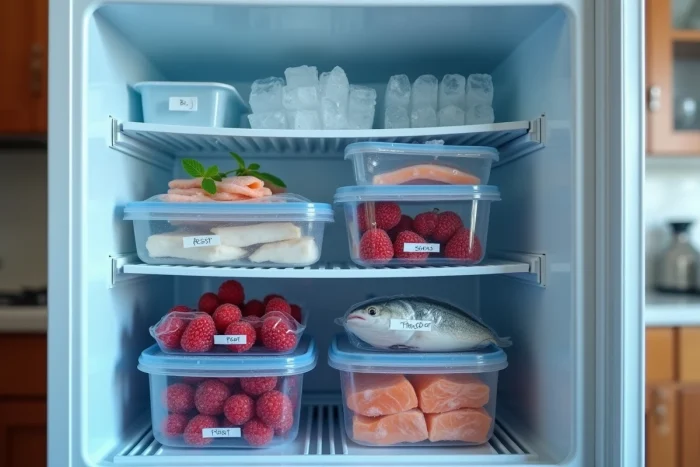
Buying raw fresh products (fish fillet, piece of meat) and freezing them oneself within an hour of purchase reduces dependence on industrial processed dishes, which are statistically more exposed to contamination due to their long production chains. Rapidly freezing a raw product limits the time of exposure to bacteria between purchase and storage.
This reasoning does not replace basic hygiene rules (respecting the cold chain, hand washing, cleaning surfaces), but it adds a layer of security to the domestic food stock that a classic freezer does not guarantee as effectively.
Electricity consumption and energy label: compare before buying
Since March 2021, the new European energy label (regulation 2019/2016) has removed the A+ to A+++ classes to return to a scale from A to G. This overhaul makes comparisons clearer between domestic refrigeration appliances.
A domestic blast freezer consumes more than a classic freezer during the active freezing phase, as it must quickly drop to very low temperatures. However, the consumption in maintenance mode remains comparable to that of a freezer of the same volume once the temperature is stabilized.
Points to check on the energy label
- The energy class according to the new European scale (aim for at least class D for frequent use).
- The annual consumption in kWh, which allows for calculating the actual electricity cost over the device’s lifespan.
- The usable volume in liters: an oversized blast freezer compared to the actual needs of the household consumes unnecessarily.
- The presence or absence of a “boost” freezing mode, which limits the consumption peak to only the rapid freezing phases.
The decision is made between the temporary energy cost of freezing and the savings generated by reducing food waste and decreasing purchases of prepared dishes.
Which household profile benefits most from a domestic blast freezer
Large families who practice weekly batch cooking directly benefit from rapid freezing, as the volumes cooked justify quick and secure cooling. Individuals living alone or as a couple also find it useful if they buy fresh products on sale and want to store them without loss of quality.
The domestic blast freezer bridges the gap between professional equipment and the general public freezer. Recent models, like the Freddy presented by several manufacturers, can drop to -40 °C while remaining compatible with standard kitchen dimensions. The determining criterion remains the frequency of use: a household that freezes two to three times a week amortizes the device much faster than occasional monthly use.