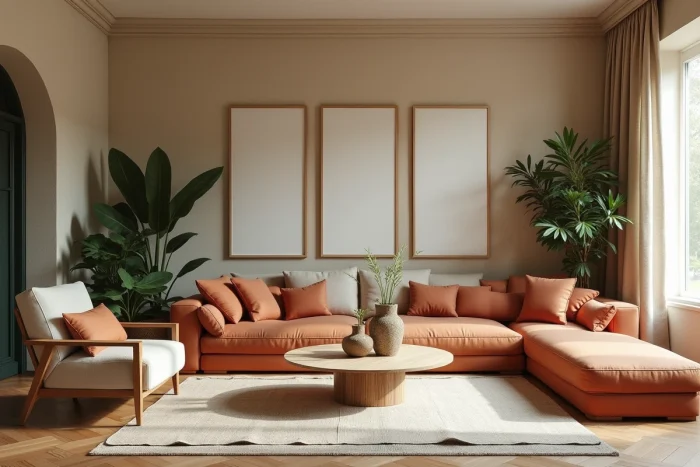
Modern decoration refers to a set of aesthetic and functional choices that prioritize clean lines, raw or natural materials, and a controlled color palette. Transforming your interior with modern and inspiring decoration involves going beyond a simple color change to rethink the use of each room, the flow of light, and the coherence of textures.
The following ten ideas correspond to concrete techniques or choices that can be applied in a living room, bedroom, or entryway, without requiring heavy renovations.
1. Textured plaster accent wall
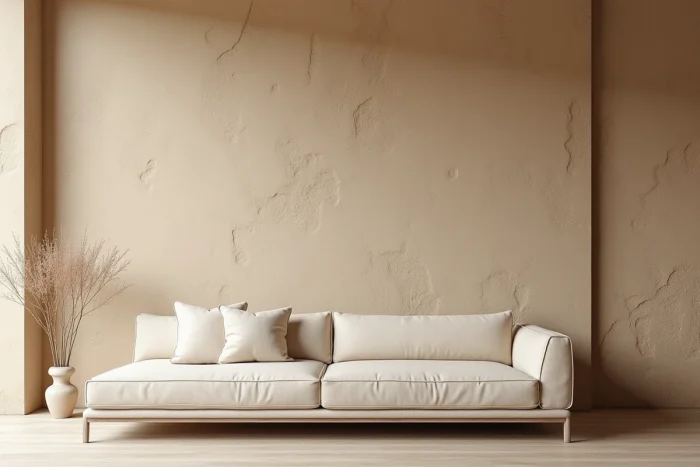
Rather than a solid paint, a mineral effect plaster (lime, tadelakt, stucco) transforms a wall into a focal point. The material creates subtle variations in shade that change with daylight, which a matte paint cannot replicate.
Applying this plaster to a single wall, behind a sofa or a headboard, is enough to anchor the room’s style. The rest of the walls can remain in a neutral tone to avoid visual overload.
2. Thrifted furniture integrated into a contemporary project
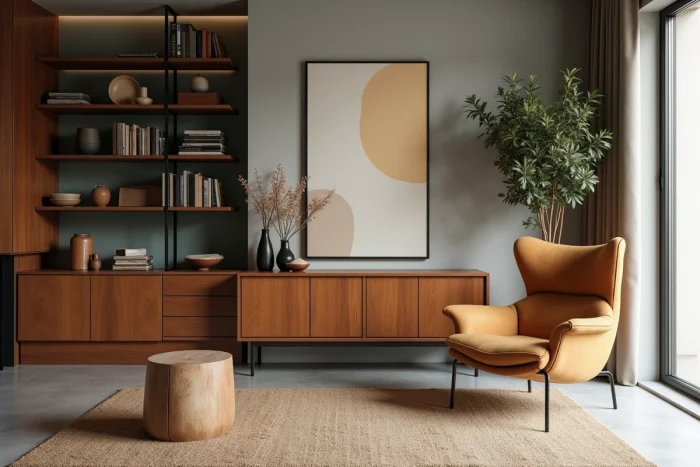
According to the 2024 1stDibs report, design agencies are now structuring their offerings around the purchase of second-hand furniture to reduce carbon footprints and delivery times. The principle: select one or two thrifted pieces (armchair, sideboard, light fixture) and integrate them into a decor with contemporary lines.
The contrast between a patinated piece and a modern environment adds depth that new items alone do not produce. To successfully mix styles, one can browse the inspirations published on the Mon Blog Déco site and identify successful associations between eras.
3. Layered lighting
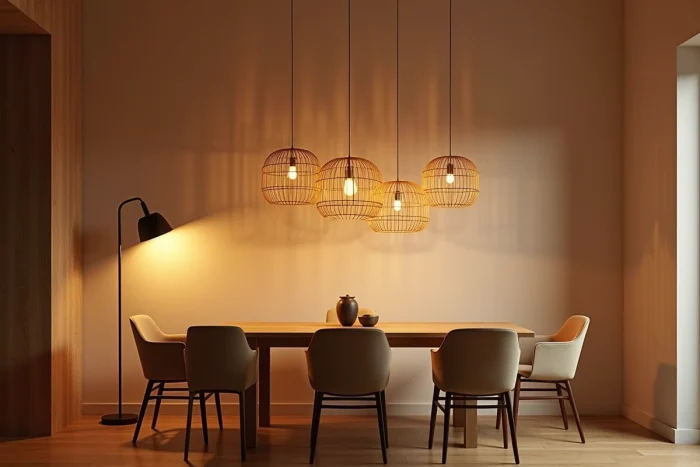
A single ceiling light flattens the volumes. Modern decoration relies on a structured lighting scheme in three levels: ambient light (pendant or dimmer), functional light (reading lamp, desk lamp), and accent light (adjustable spots, LED strips behind furniture).
Layering these sources allows for changing the atmosphere of a room without touching the furniture. In the evening, turning off the ceiling light and activating only the accent lamps transforms a living room into a cozy space.
4. Terracotta and sage green palette
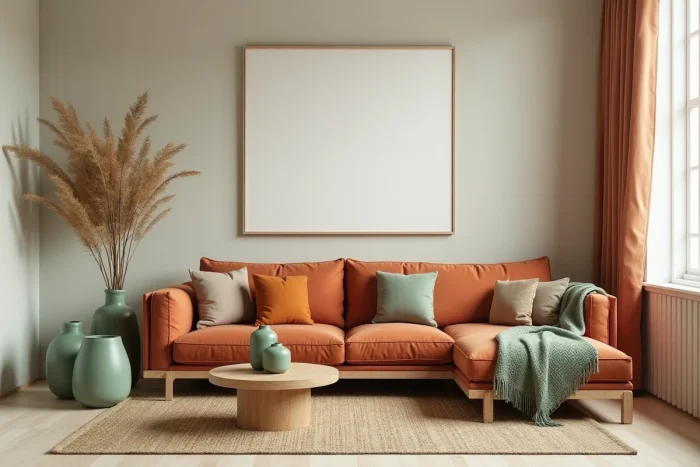
Current color palettes are moving away from the dominant gray. The combination of terracotta and sage green creates a balance between warmth and freshness, applicable in both a living room and a bedroom.
Limiting the palette to a maximum of three shades (two colors and one neutral) ensures coherence. Colors are introduced through textiles (cushions, curtains, rugs) rather than walls, allowing for a change in ambiance without repainting.
5. Glass partition like a workshop
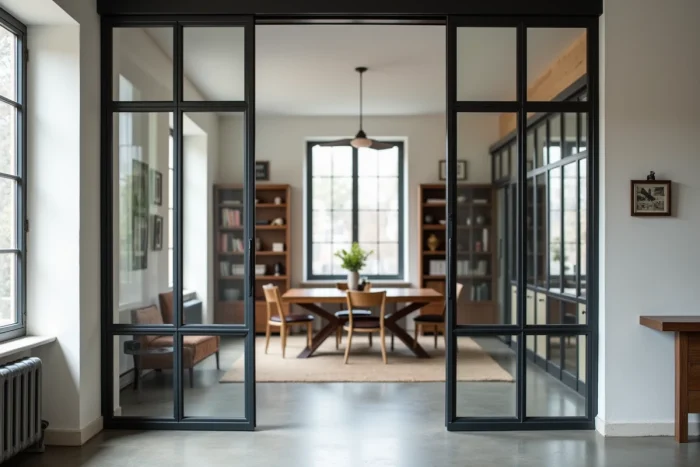
The black metal glass partition delineates spaces without cutting off light. It works particularly well between the kitchen and living room or between the entryway and living area.
Its main advantage: separating functions while maintaining visual depth. In small apartments, this transparency effect prevents the feeling of confinement that a solid wall would create.
6. Architectural plants in oversized pots
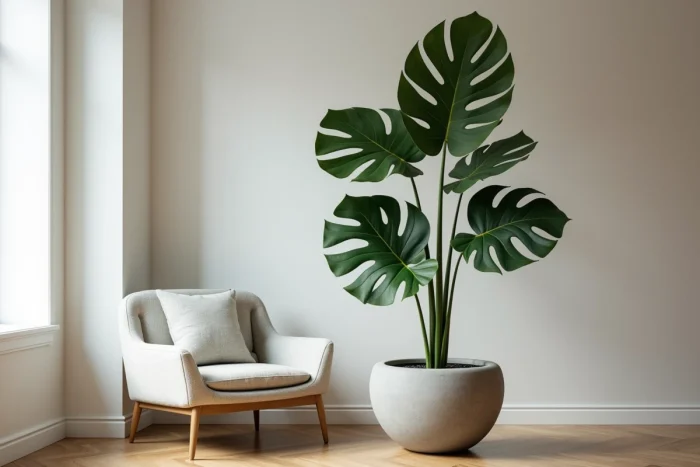
A green plant placed on a shelf does not have the same effect as an indoor olive tree or a fiddle leaf fig installed in a large terracotta pot. Architectural plants serve as living sculptures and add volume to an empty corner.
For a modern look, the pot is just as important as the plant. A container made of polished concrete, glazed ceramic, or woven natural fiber enhances the style of the space.
7. Textiles with layered textures
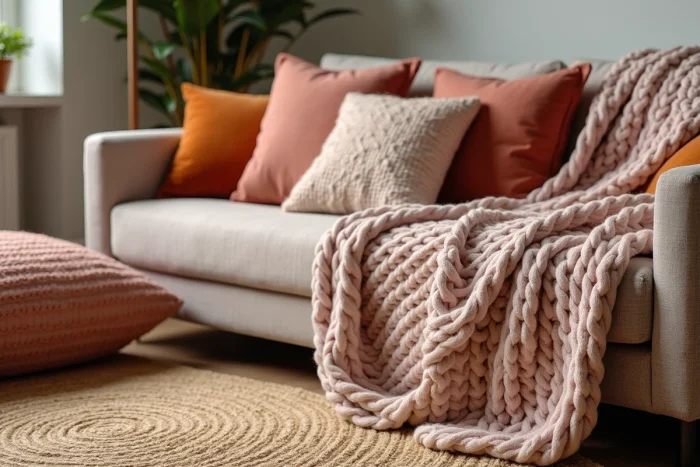
A sofa alone appears cold. Adding varied textiles (crumpled linen, boucle wool, corduroy velvet) creates what decorators call layering. The goal is to produce tactile richness without multiplying colors.
- Washed linen for curtains and cushion covers, providing a natural and relaxed drape
- Boucle wool or mohair for a throw that adds texture
- Corduroy velvet or waffle cotton for accent cushions, creating a contrast of materials
The trick is to stay within the same color family so that textures take precedence over colors.
8. Customized gallery wall
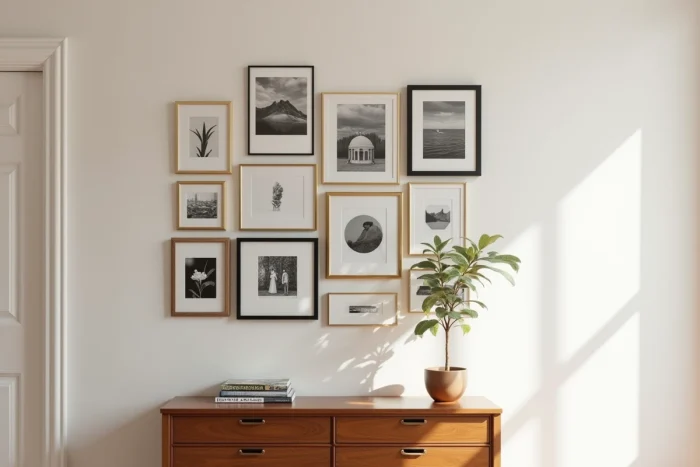
Wall art goes beyond a simple painting centered above the sofa. A gallery wall mixes formats (photo, illustration, small framed object) to tell a story unique to the inhabitant.
The technical rule: align the frames along a median horizontal axis rather than centering them individually. This invisible alignment creates a coherent ensemble despite the diversity of formats.
9. Neuro-inclusive design of rest areas
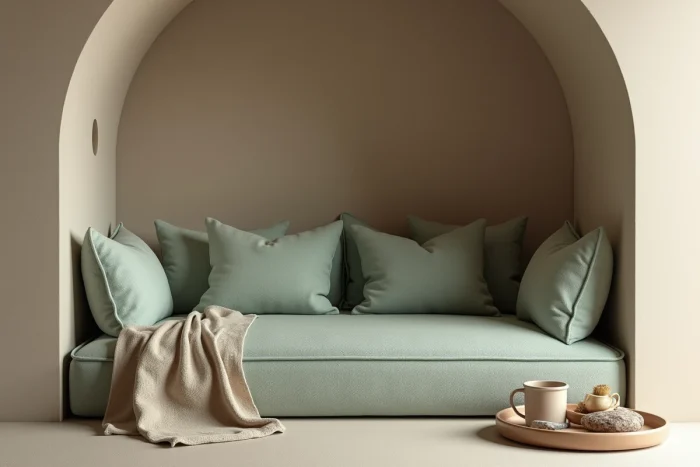
The ASID identified in 2024 an increase in requests for interiors adapted for neurodivergent individuals. Concretely, this translates into measurable decoration choices:
- Adjustable lighting in intensity and color temperature to reduce sensory fatigue
- Absorbent materials (thick rugs, heavy curtains, decorative acoustic panels) to dampen noise
- Calm buffer zones, such as a reading nook isolated by a screen or an open bookshelf
These arrangements benefit all occupants of the home, not just those concerned. A space designed for sensory regulation is more restful for everyone.
10. Integrated and invisible storage
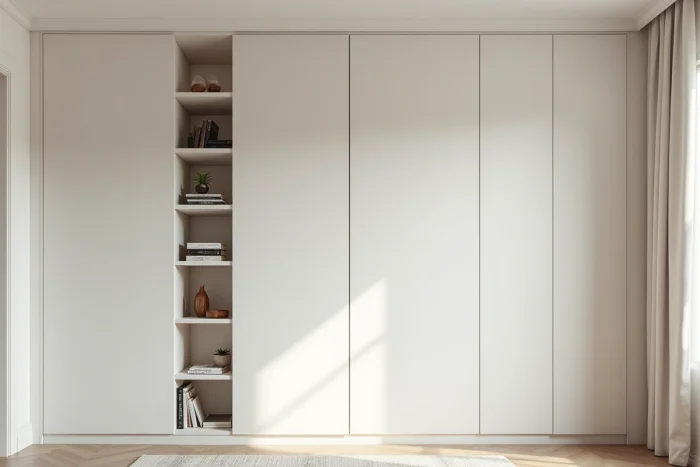
Visible storage (overloaded open shelves, stacked baskets) creates visual noise. The current trend favors smooth facades without handles, recessed niches, and custom furniture that hugs the walls.
The desired effect is the disappearance of storage within the architecture of the room. A TV unit running the entire length of a wall, with push-to-open doors, effectively replaces a succession of mismatched small furniture pieces.
Each of these ten ideas acts on a different lever of interior decoration: light, color, texture, volume, or space organization. Combining two or three of them, rather than all at once, allows for maintaining coherence and adapting the transformation to each room in the house.