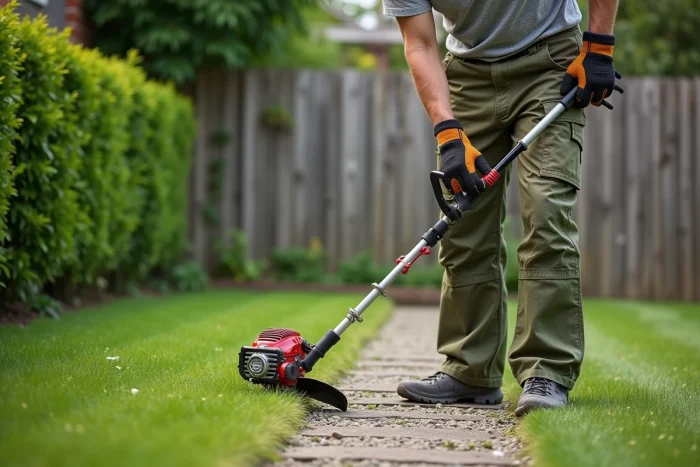
A thermal trimmer is a finishing tool equipped with a combustion engine (two-stroke or four-stroke) that drives a nylon line or blade at high speed to cut grass where the mower cannot reach. Its distinctive feature compared to electric or battery models is its unlimited autonomy and cutting power, two parameters that determine the type of vegetation it can handle and the area it can cover without interruption.
Two-stroke or four-stroke engine: what it changes in daily use
The choice between a two-stroke engine and a four-stroke engine goes beyond just the technical specifications. A two-stroke engine operates with a pre-mixed gasoline-oil mixture. It produces more smoke, consumes more, but delivers high torque for a contained weight.
A four-stroke engine, on the other hand, separates oil and gasoline. It runs more smoothly, consumes less, and emits fewer pollutants. Emission standards for small engines (such as Stage V) are pushing manufacturers towards four-stroke engines or low-emission two-strokes. For the buyer, this translates into concrete differences in smell, smoke, and consumption over time.
One often overlooked point: compatibility with fuels available at gas stations. Some two-stroke engines do not handle SP95-E10 well, as its ethanol content accelerates the aging of hoses and seals. Feedback from specialized sellers indicates premature failures in devices powered exclusively by E10.
An alkylate fuel, which is more stable and less aggressive, extends the life of the engine, even though it is significantly more expensive per liter. Several specialized comparisons referenced on coupebordurethermique.fr detail these differences in engine types model by model.
Engine displacement and cutting width: sizing the device for its terrain
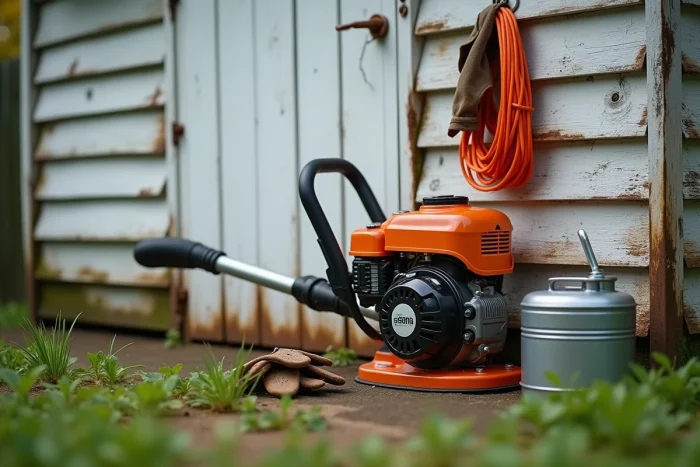
The displacement of a thermal trimmer directly determines its ability to tackle tall grasses, tough grasses, or woody regrowth along hedge borders. A modest displacement is suitable for regular maintenance of a standard lawn. A larger displacement becomes necessary as the vegetation exceeds the stage of soft grass.
The cutting width affects working time as much as the power of the engine. A narrow cutting head offers precision along walls and flower beds. A wide head covers more area with each pass but loses maneuverability in tight corners.
- For a modest-sized garden with straight borders, a reduced cutting width and low displacement are more than sufficient.
- For a sloped area with partially overgrown zones, a higher displacement and thicker cutting line (or even a blade head) prevent straining the engine.
- For very large areas or rough terrain, the thermal trimmer approaches a brush cutter, with a harness and a D or U handle.
Noise and regulations: a criterion often overlooked in comparisons
A thermal trimmer is noisy. Significantly more than an electric or battery model. This parameter is not trivial: several municipalities and prefectural orders restrict the hours of use for noisy gardening equipment, with allowed time slots often limited to mornings and early afternoons on weekdays.
Before purchasing, checking the current municipal orders prevents ending up with a powerful device that cannot be used on weekends or in the evenings. The actual noise level of the machine (expressed in decibels, indicated on the product sheet) then becomes a selection criterion as crucial as power.
A four-stroke thermal model is generally quieter than a two-stroke of equivalent displacement, which can make a difference in a dense housing area.

Maintenance of the thermal trimmer: the important actions
Maintaining a thermal trimmer goes beyond just changing the cutting line. The combustion engine requires regular upkeep, which is more demanding than an electric model.
- Change the engine oil (on a four-stroke) or check the mixture ratio (on a two-stroke) at the start of each season.
- Clean or replace the air filter, which clogs quickly in dusty conditions.
- Check the spark plug: gradual fouling causes starting issues and loss of power.
- Empty the tank at the end of the season to prevent fuel degradation and clogging the carburetor during winter.
A well-maintained thermal trimmer lasts several seasons without significant loss of performance. Neglecting these actions, especially with E10 fuel, significantly shortens the lifespan of the device.
Line, blade, or mixed head
The cutting system also deserves special attention. A round nylon line is suitable for soft grass. A square or serrated line cuts more effectively through thick grasses. Plastic or metal blade heads are designed for dense vegetation but add weight to the device and increase the risk of projectiles.
Choosing the right cutting system prevents overloading the engine beyond its capabilities, which reduces consumption and mechanical wear.
The thermal trimmer remains the most versatile finishing tool for large areas or resistant vegetation. Its main drawback, noise, can be managed by checking local regulations before purchase. The choice between two-stroke and four-stroke mainly depends on the frequency of use and tolerance for maintenance constraints.