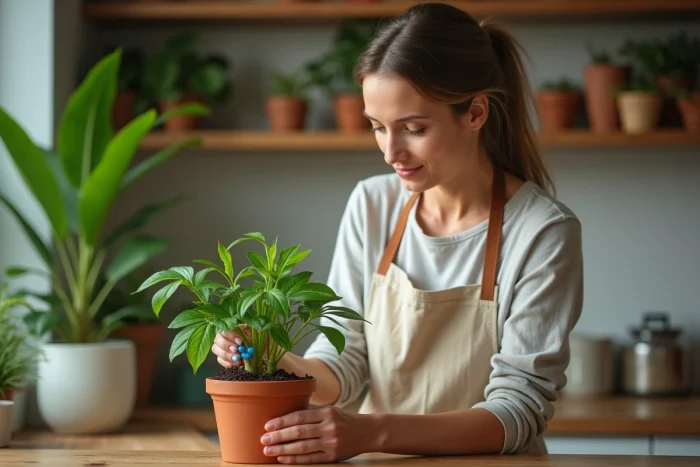
Indoor plant that turns yellow during a week of vacation, balcony planter dried out after three days of heatwave: we all know these situations where manual watering no longer keeps up. Water beads, also known as water-retaining crystals, offer a different approach by storing water directly in the substrate to release it to the roots over time. Their principle seems simple, but their use in real conditions deserves attention.
Water beads and substrate: what really happens in the pot
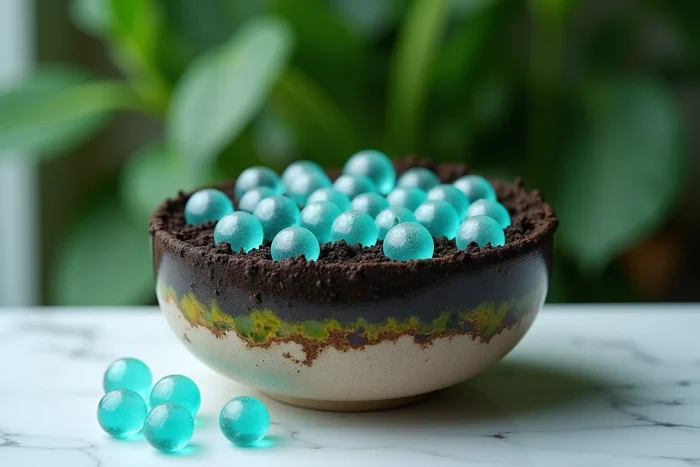
Before discussing easy watering, it is essential to understand the mechanism. Water beads are tiny crystals (often made of acrylamide copolymer or, for plant-based versions, from bio-sourced materials) that absorb water like a sponge. When dry, they measure a few millimeters. When hydrated, they swell to the size of a marble.
Mixed with potting soil, they gradually release water to the roots as the substrate dries out. The soil remains moist longer without becoming waterlogged, at least in theory.
In practice, results vary depending on the pot size, soil composition, and sun exposure. A small terracotta pot on a south-facing windowsill dries out much faster than a large plastic planter in the shade.
Comparative tests conducted by horticultural institutes confirm that the gain in watering frequency strongly depends on the context (type of substrate, container size, ambient climate). A universal figure cannot be established. To delve deeper into the topic, there is a comprehensive guide on water beads for plants on Brico Déco Home that details the various possible applications.
Compatible plants and contraindications to know
Not all plants react the same way to a substrate that retains more moisture. This is a point that many guides forget to explore.
Plants that benefit
Tropical indoor species (pothos, ferns, peace lilies) and water-hungry bedding plants (impatiens, potted hydrangeas) gain a net benefit from water beads. Their root system appreciates a constant and moderate humidity.
Water beads and succulents: a bad reflex
The Royal Horticultural Society reminds us in its recommendations on water-retaining crystals: succulents, cacti, lavenders, and rosemaries are poorly suited to this type of product. These plants need a very draining substrate that dries quickly between waterings.
Maintaining prolonged moisture at the root level encourages root rot and fungal diseases, even indoors. If cultivating a mix of plants on the same balcony, it is better to reserve water beads for the pots of species that can tolerate them, and leave the Mediterranean plants with a classic substrate.
- Compatible plants: tropical indoor plants, annual bedding plants, lush foliage houseplants that require consistently moist soil.
- Plants to avoid: all species from arid or Mediterranean environments (cacti, agaves, sedums, herbs like thyme or sage).
- Gray area: some bulbous or hardy perennial plants may tolerate water beads in summer, but feedback on this point varies depending on growing conditions.
Concrete implementation in a pot or planter
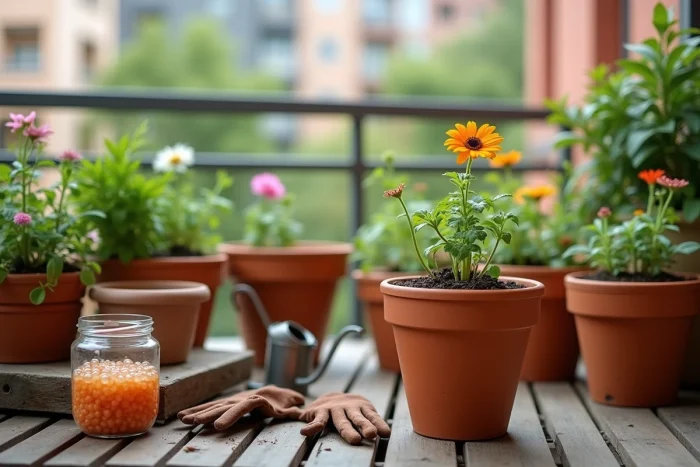
We start with a common case: a medium-sized balcony planter, planted with geraniums or petunias, exposed to sunlight for a good part of the day.
Preparation step
Water beads come in the form of dry granules. They are first hydrated in a container of water for several hours (the duration depends on the manufacturer and the size of the beads). They swell and become translucent. Do not incorporate them dry into the substrate, or the potting soil may lift when they absorb watering water.
Integration into potting soil
Hydrated beads are mixed directly into the potting soil evenly before filling the pot. The goal is to distribute water reserves throughout the depth of the container, not just on the surface. For repotting, one can also dig holes in the existing substrate and slip in the beads, but the distribution will be less uniform.
Some gardeners use water beads as a bottom layer, under the potting soil. This technique works for upward capillary watering, but it concentrates moisture at the bottom of the pot and can drown the roots of sensitive species.
Safety and regulation: water beads and microplastics
One cannot discuss water beads without addressing the environmental and health issues.
The European Chemicals Agency (ECHA) adopted a decision in 2023 regarding microplastics that directly concerns certain types of polymer beads. Water beads made from acrylamide copolymer fall under this regulation, prompting manufacturers to offer bio-sourced alternatives made from plant materials.
On the home safety side, poison control centers regularly report cases of accidental ingestion by young children or pets. The beads, colorful and attractive, can cause intestinal obstruction by swelling in the digestive tract. Several health authorities have issued warnings since 2022.
- Store water beads out of reach of children and pets, even once hydrated in pots.
- Prefer biodegradable versions certified free of harmful substances.
- Check the product’s compliance with current European regulations before purchase.
For households with young children, placing pots containing water beads out of reach remains the most direct precaution. The decorative aspect of these colorful beads should not overshadow the fact that they are not a toy.
Water beads play a real role in spacing out the watering of water-hungry plants, provided they are associated with the right species and safety precautions are followed. The choice between synthetic and bio-sourced versions deserves attention, especially in light of European regulations on microplastics. In practice, testing on one or two pots before generalizing to the entire balcony allows for checking the substrate’s behavior without unpleasant surprises.