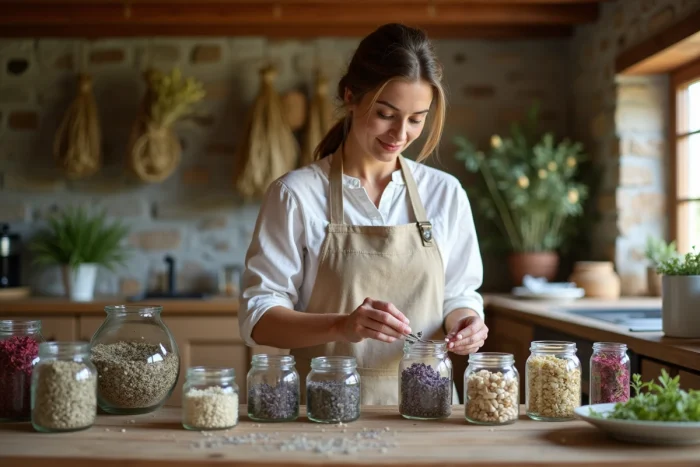
Organic flowers used in infusions are distinguished from ornamental flowers by a strict agricultural specification: absence of synthetic pesticides, traceability from field to bag, and low-temperature drying to preserve aromatic compounds. This specificity directly changes the taste profile of a cup of tea or herbal infusion.
Botanical traceability of organic flowers: what determines the quality of an infusion
An organic flower intended for infusion is not only grown without chemical inputs. Its quality depends on the exact botanical species, the terroir, and the timing of the harvest. A German chamomile harvested at the beginning of flowering does not release the same aromas as a flower picked at full maturity.
This requirement for precise botanical traceability is becoming standard among specialized producers. Rather than a simple label “chamomile flower,” batches now mention the Latin name (Matricaria chamomilla), the growing region, and sometimes the harvest date. For enthusiasts of floral infusions, this information allows for comparisons of vintages from one season to another, much like one would do for a wine appellation.
Exploring the flowers of the Jardin de Gaïa, one can see that this approach to transparency extends to less well-known varieties than the classic rose or jasmine, with detailed sheets outlining the geographical origin of each batch.
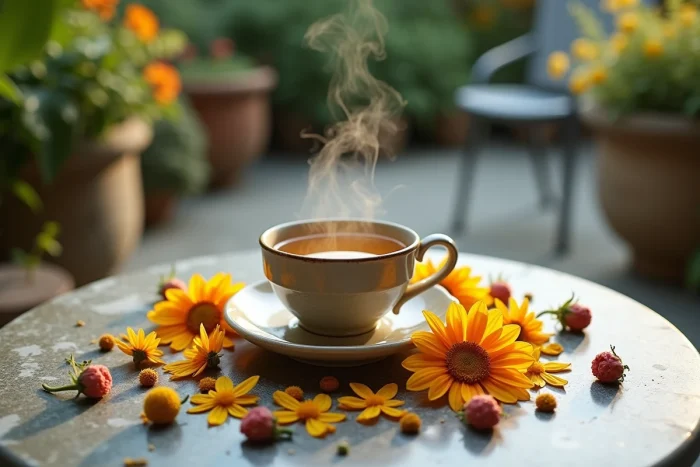
Organic flowers in infusion: suitable temperature and infusion time
Pouring boiling water over rose petals or hibiscus flowers destroys some of their volatile oils, responsible for the aroma. The ideal temperature is below the boiling point, generally between 80 and 90 °C for most dried flowers.
The infusion time plays an equally crucial role. If too short, the cup remains bland. If too long, some flowers release bitterness. Here is a guideline for the most common flowers in organic herbal tea:
- Hibiscus: water at 90 °C, infusion for five to eight minutes to achieve its intense red color and characteristic fruity acidity
- German chamomile: water at 85 °C, four to six minutes; beyond that, the taste becomes earthy
- Lavender: water at 80 °C, only three to five minutes, as the camphor notes quickly dominate
- Rose (dried petals): water at 85 °C, five to seven minutes for a sweet floral profile without astringency
These durations assume whole flowers or large pieces. Flowers ground into fine powder infuse faster and are less forgiving of temperature excesses.
Mixing flowers and tea: adjusting the infusion to the most fragile component
When combining organic flowers with green or white tea, the critical parameter remains the fragility of the tea leaves. A Japanese green tea does not tolerate water above 75 °C, while hibiscus flowers need more heat to open up.
The most reliable solution is to infuse the two components separately, then combine the brews. This method avoids sacrificing the finesse of the tea or the aromatic depth of the flowers. For pre-packaged commercial blends, the manufacturer calibrates the size of the pieces so that all ingredients release their aromas at the same speed.
Health claims and organic flowers: the European regulatory framework
Regulation (EC) No. 1924/2006 strictly governs nutritional and health claims on food products sold in Europe. Specifically, an organic herbal tea brand cannot claim that its chamomile “cures insomnia” or that its hibiscus “lowers blood pressure” without having an authorized claim from the competent European authority.
This constraint explains why most producers of teas and floral infusions today prefer a sensory vocabulary rather than a medical one. Phrases like “promotes relaxation” or “moment of serenity” are used instead of “treats anxiety.” This shift is significant for consumers: it signals that no clinically validated evidence at the European level supports the promise.
This caution does not diminish the value of an organic flower infusion. The organoleptic properties (taste, aroma, mouthfeel) remain the primary selection criterion for most herbal tea enthusiasts. Knowing that the regulatory framework filters excessive promises allows one to focus on what truly matters: the taste quality of the product.
Storage of dried organic flowers: preserving aroma over time
Dried organic flowers lose their aromatic oils when exposed to light, moisture, and oxygen. Storing in an opaque, airtight container extends the aromatic shelf life by several months compared to an open paper bag.
Here are some practical storage rules:
- Stable room temperature, ideally below 25 °C, away from a heat source (oven, south-facing window)
- Container made of metal or tinted glass, with a sealing joint, rather than plastic which can absorb or transmit odors
- No refrigerator: condensation upon opening the container re-hydrates the petals and accelerates degradation
A well-stored organic flower retains a strong fragrance when the container is opened. If the smell is dull or dusty, the resulting infusion will be too. The nose remains the best quality control tool before each preparation.
The choice of organic flowers for infusions and teas is based on verifiable criteria: traceability of the botanical species, control of infusion temperature, compliance with the regulatory framework on claims, and rigorous storage. The difference between a mediocre floral herbal tea and a remarkable cup often lies in these technical details rather than the rarity of the plant.